Description:
Generates a barcode within a FlowWright form using the supplied barcode text and configurable barcode display properties.
Inputs
- FormID - Name of the widget generated by FlowWright (read-only field)
- Barcode Text - Provide sample barcode text here
- Select barcode type - Select any one barcode type from the drop-down list here
- Text location - Select the text location to be placed from the drop-down list here
- Barcode Height - Provide the required barcode height in pixels
- Barcode Width - Provide the required barcode width in pixels
- Hide - Select the checkbox to hide (tick mark)
- Lock Widget - Click the button to toggle the lock/unlock feature
- Save button - Save the input values
- Delete button - Remove this form widget from the designer page
- Close button - Close the input popup window
Design:
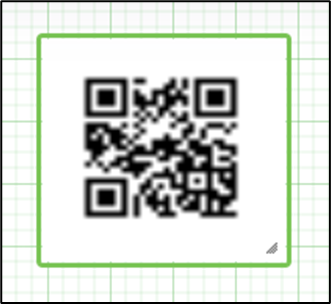
The BarcodeWidget is a FlowWright form widget in the Engine category. It is implemented by FlowWright.Forms.barCodeWidget in FlowWright.Forms.dll and is displayed in the form designer as Generate barcode.
Unlike a workflow process step, BarcodeWidget is a form component. Place it on a FlowWright form where you need to visually represent barcode information.
Use the BarcodeWidget when a FlowWright form needs to display machine-readable barcode information.
You can configure the widget with the barcode text and, when needed, the barcode type, text location, height, and width. Because barcode text is required, you must supply a value for the widget to generate the barcode. BarcodeWidget
For example, a workflow may generate or retrieve an identifier such as an order number, asset number, or document number and use that value as the Barcode text on a form.
Typical Workflow Suggestions:
Asset Tracking
Use BarcodeWidget on an asset registration or asset management form to display a barcode representing an asset identifier.
Example workflow:
Start → Asset Registration Form → Generate Asset ID → Asset Review → Store Asset → End
The generated asset identifier can be represented as a barcode so that the asset can be associated with machine-readable identification.
Inventory Management
Use the widget on an inventory form to display a barcode for an inventory or stock item.
Example workflow:
Start → Inventory Entry Form → Validate Item → Generate/Assign Item ID → Inventory Approval → End
The barcode can represent the item identifier and display directly on the form.
Order Processing
Use BarcodeWidget on an order-related form to display a barcode representing an order number or other order identifier.
Example workflow:
Start → Order Form → Validate Order → Generate Order ID → Order Processing → End
The barcode provides a machine-readable representation of the identifier captured or generated during the process.
Document or Record Identification
Use the widget on a document-related form when a document or business record needs a barcode identifier.
Example workflow:
Start → Document Registration Form → Assign Document ID → Review → Approve → End
The document identifier can be supplied as the Barcode text and displayed as a barcode on the form.
Shipping and Delivery
Use BarcodeWidget on shipping or delivery forms to represent a shipment, package, or delivery identifier.
Example workflow:
Start → Shipment Form → Validate Shipment → Generate Shipment ID → Dispatch → Delivery Confirmation → End
The barcode provides a convenient, machine-readable representation of the shipment identifier.
Example:
Let’s build and execute the “BarcodeDef” example.
- Create a Form definition called “BarcodeDef.” Navigate to Forms > Definitions in the left pane to create it. On the Form Definitions page, select Actions > Create. If you do not have access to generate Form Definitions, check with your Flowwright administrator.

- Drag a "BootstrapGrid, Label, Barcode, and Submit” control onto the canvas and arrange them as shown below.

- Double-click the “Barcode” widget to configure the “Settings” properties. The application displays the control's name. Select the barcode type from the drop-down list. Specify the location where the text will be displayed. Enter the pixel values for the barcode's height and width. Enter the text to be represented as a barcode. Select the checkbox to hide the control at runtime. Click the “Lock Widget” button to toggle the lock/unlock feature and prevent accidental configuration changes. Click the “Save” button.

- Save the Form definition. Select Actions > Create Form Instance. Generate a new Form Instance, then select the checkbox to edit it. Check with your FlowWright administrator if you don't have access to generate Form Instances.

- The Form is displayed to the user as shown below. Scan the barcode to visit the website.

Tips:
- Always provide a valid value for Barcode text, because it is the only required input.
- Select the barcode type appropriate for the data being represented.
- Adjust the barcode height and width when the barcode needs to fit within a specific form layout.
- Use Text location when you need to position the human-readable barcode text in a particular location.
- Use workflow-generated identifiers as barcode text when the barcode needs to uniquely identify a business record.
- Test the generated barcode at its intended display or print size to ensure that it fits the form layout.
Definition Sample:
You may download and extract the sample definition(s) from the link provided and later import them (drag-and-drop) into your FlowWright Process Definition (XML file) or Form Definition (HTML file) page.
Note: After the import, verify and complete any missing configurations, such as file path references and database connections. Then, save the definition to confirm the changes.
Click here to download the sample file.